










What Makes Olive Oil Gourmet: Key Markers Explained
Choosing the right olive oil makes a big difference for both your kitchen and your wellness routine. Gourmet food lovers across North America are discovering that not all olive oils offer the same flavor, purity, or health benefits. Genuine organic options with high phenolic content deliver a richer taste and measurable wellness advantages, setting them apart from ordinary oils found on supermarket shelves. This guide uncovers what truly defines premium olive oil and clears up the most common myths holding consumers back.
Table of Contents
- Defining Gourmet Olive Oil And Common Myths
- Types Of Olive Oil And Grading Standards
- Key Qualities: Phenolic Content, Taste, And Purity
- Harvest Methods And Production Techniques
- Certifications, Labels, And Authenticity Signs
- Avoiding Counterfeits And Making Informed Choices
Key Takeaways
| Point | Details |
|---|---|
| Genuine Gourmet Olive Oil | Authentic gourmet olive oils offer complex flavor profiles and health benefits, elevated by careful production methods. |
| Grading Standards Matter | Understanding the differences in olive oil grades is essential for quality; extra virgin represents the highest standard available. |
| Importance of Certifications | Look for certifications like IOC and PDO to ensure the authenticity and quality of your olive oil purchases. |
| Be Aware of Counterfeits | Educate yourself on common olive oil fraud tactics, and choose reputable sources to guarantee product integrity. |
Defining Gourmet Olive Oil and Common Myths
Understanding gourmet olive oil goes far beyond basic grocery store selections. Authentic gourmet olive oils represent a complex intersection of agricultural science, terroir, and meticulous production techniques that elevate them from ordinary cooking oils to premium culinary experiences.
The landscape of olive oil quality is frequently misunderstood, with numerous myths clouding consumer perceptions. Scientific research on olive oil quality reveals critical distinctions between authentic extra virgin olive oils and mass-produced alternatives. These key differences encompass several crucial factors:
- Phenolic Content: Genuine gourmet olive oils contain higher levels of health-promoting phenolic compounds
- Harvest Timing: Early harvest olives produce more robust, complex flavor profiles
- Geographical Origin: Specific microclimates dramatically influence olive oil characteristics
- Production Methods: Cold-pressed techniques preserve nutritional integrity
Consumers often mistakenly believe that all olive oils are identical, when in reality, significant variations exist between industrial and artisanal productions. Extra virgin olive oil represents the highest quality classification, requiring stringent chemical and sensory standards that most commercial oils cannot meet.
True gourmet olive oil is not just a condiment - it’s a carefully crafted agricultural product with nuanced flavor profiles and substantial health benefits.
The most pervasive myths surrounding olive oil include misconceptions about cooking temperatures, storage requirements, and nutritional value. Professional food scientists emphasize that high-quality extra virgin olive oils maintain their beneficial properties when used appropriately, contrary to popular belief about their heat stability.
Pro tip: Always store your gourmet olive oil in a cool, dark place and use within 6-12 months of harvest to preserve its extraordinary flavor and nutritional potency.
Types of Olive Oil and Grading Standards
Understanding the complex world of olive oil requires comprehensive knowledge of international grading standards. The International Olive Council (IOC) has established rigorous criteria that define multiple categories of olive oil, each with distinct chemical and sensory characteristics.
Olive oils are traditionally classified into several key categories:
- Extra Virgin Olive Oil: The highest quality, requiring zero sensory defects
- Virgin Olive Oil: Slightly lower quality with minimal sensory imperfections
- Refined Olive Oil: Processed to remove significant flavor characteristics
- Pomace Olive Oil: Extracted using chemical solvents after mechanical pressing
- Lampante Oil: Unsuitable for direct consumption, requiring extensive refinement
The grading process involves comprehensive evaluation through two primary assessment methods: chemical analysis and sensory evaluation. Chemical testing examines critical parameters such as:
Here is a summary comparing different olive oil grades and their typical uses:
| Olive Oil Grade | Typical Use | Key Characteristics |
|---|---|---|
| Extra Virgin | Finishing, drizzling | Robust flavor, low acidity, no defects |
| Virgin | Sautéing, dressings | Slightly less flavor, minor imperfections |
| Refined | High-heat cooking | Neutral taste, lacks natural antioxidants |
| Pomace | Frying, baking | Extracted with solvents, mild taste |
| Lampante | Industrial purposes | Not for consumption, requires refinement |
- Acidity levels
- Peroxide value
- Ultraviolet light absorption
- Fatty acid composition
Authentic olive oil grading goes far beyond simple taste tests - it’s a sophisticated scientific process that ensures consumer quality and safety.
Consumers should understand that not all olive oils are created equal. Olive oil grades represent more than just marketing terminology - they reflect genuine differences in production, nutritional value, and culinary potential.
Professional olive oil experts conduct detailed sensory evaluations, examining factors like fruitiness, bitterness, and potential flavor defects. These assessments determine whether an olive oil meets the stringent requirements for various quality classifications.

Pro tip: When purchasing olive oil, always check for official certification labels and look for harvest dates to ensure maximum freshness and quality.
Key Qualities: Phenolic Content, Taste, and Purity
Gourmet olive oil represents a sophisticated intersection of scientific precision and culinary artistry, with phenolic compounds serving as critical markers of exceptional quality. Phenolic content research reveals that these molecular compounds are far more than simple flavor enhancers - they are complex indicators of an olive oil’s nutritional and sensory profile.
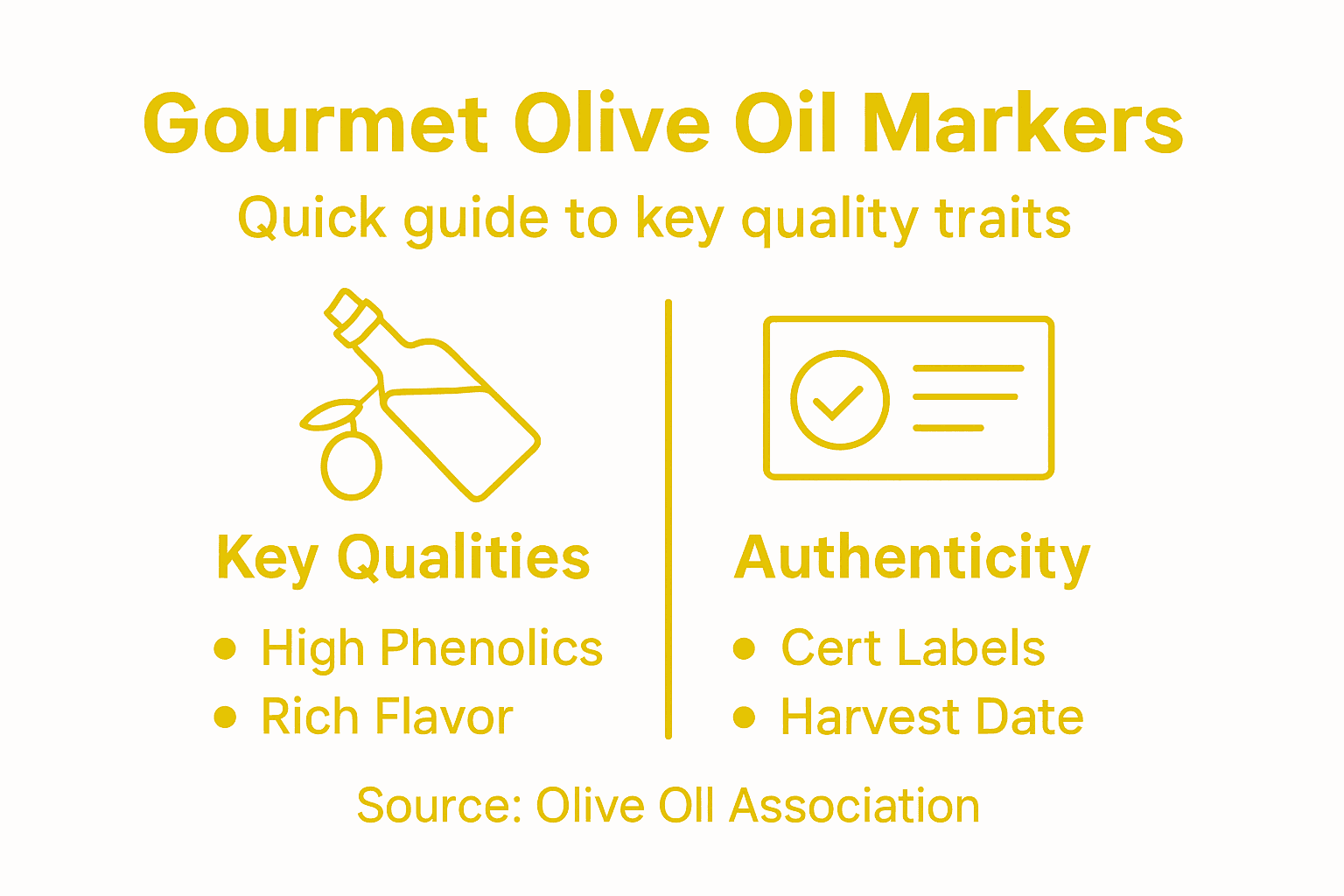
The key qualities that distinguish premium olive oils include:
- Phenolic Complexity: Concentration and diversity of health-promoting compounds
- Sensory Characteristics: Nuanced flavor profiles with balanced bitterness and pungency
- Purity Indicators: Low acidity and absence of chemical processing
- Harvest Specifics: Early harvest olives with higher phenolic concentrations
- Geographical Origin: Specific microclimates influencing molecular composition
Phenolic compounds play a multifaceted role in defining olive oil’s character. Specific molecules like oleuropein and oleocanthal contribute not just to taste, but also to the oil’s potential health benefits. These compounds create the distinctive bitter and pungent notes that sophisticated palates recognize as markers of authenticity.
Authentic gourmet olive oil is a living product - its phenolic profile tells a story of terroir, cultivation, and meticulous production.
Professional olive oil experts evaluate oils through rigorous sensory analysis, examining nuanced characteristics that extend far beyond simple taste tests. The interaction between different phenolic compounds determines the oil’s overall flavor complexity, with each molecule contributing to a sophisticated sensory experience.
Pro tip: Store your high-phenolic olive oil in a cool, dark place and consume within 12-18 months to preserve its remarkable molecular integrity and flavor profile.
Harvest Methods and Production Techniques
The art of producing exceptional olive oil transcends traditional agricultural practices, with modern innovations revolutionizing extraction techniques. Advanced production technologies are transforming how high-quality extra virgin olive oil is manufactured, introducing sophisticated methods that enhance both yield and nutritional integrity.
Key harvest and production techniques that define gourmet olive oil include:
- Early Harvest Picking: Olives harvested before full ripeness
- Mechanical Extraction: Cold-press methods preserving molecular structures
- Temperature Control: Precise thermal management during processing
- Minimal Processing: Limiting intervention to maintain oil’s natural characteristics
- Rapid Processing: Minimizing time between harvesting and extraction
The evolution of olive oil production has seen remarkable technological interventions. Modern techniques such as ultrasound processing, pulsed electric fields, and advanced heat exchangers allow producers to optimize extraction while maintaining the oil’s delicate phenolic compounds and sensory qualities.
Gourmet olive oil production is a delicate balance between scientific precision and traditional craftsmanship, where each technological intervention must respect the olive’s inherent complexity.
Professional olive oil producers carefully calibrate multiple variables during production. Factors like olive variety, harvest timing, transportation conditions, and extraction parameters all contribute to the final product’s quality. The goal is always to preserve the olive’s natural nutritional profile while maximizing extraction efficiency.
Pro tip: Select olive oils from producers who document their entire production process, from grove to bottle, ensuring maximum transparency and quality control.
Certifications, Labels, and Authenticity Signs
Navigating the complex world of olive oil requires understanding the critical role of international certifications in ensuring product quality and authenticity. Olive oil certification standards represent a sophisticated system designed to protect consumers from adulteration and guarantee the highest quality agricultural products.
Key authenticity markers include:
- International Olive Council (IOC) Certification: Globally recognized quality standard
- Protected Designation of Origin (PDO) Labels: Guarantees geographical authenticity
- Chemical Analysis Markers: Precise measurements of acidity and peroxide levels
- Sensory Evaluation Certificates: Professional taste panel assessments
- Organic Farming Certifications: Verification of sustainable agricultural practices
The certification landscape involves multiple layers of verification. Professional organizations like the Extra Virgin Alliance (EVA) and Codex Alimentarius establish rigorous criteria that go beyond basic chemical testing, examining everything from production methods to molecular composition.
Authentic gourmet olive oil certifications are more than paperwork - they’re a comprehensive quality assurance system protecting consumer interests.
Consumers should look for specific hallmarks that indicate genuine, high-quality olive oil. These include transparent supply chain documentation, harvest dates, precise origin information, and comprehensive laboratory test results that demonstrate the oil’s nutritional and sensory characteristics.
This table highlights essential ways to spot authentic gourmet olive oil:
| Authenticity Indicator | What to Look For | Why It Matters |
|---|---|---|
| Harvest Date | Clearly printed on label | Fresher oil offers better quality |
| Certification Mark | IOC, PDO, or organic seal | Confirms rigorous quality standards |
| Detailed Origin | Single estate or region named | Ensures traceability of the oil |
| Lab Analysis Results | Acidity and peroxide values listed | Indicates purity and proper production |
Pro tip: Always cross-reference certification labels with official international databases to verify the authenticity of your olive oil’s claimed credentials.
Avoiding Counterfeits and Making Informed Choices
Olive oil fraud represents a significant global challenge, with sophisticated counterfeiters constantly developing new methods to deceive consumers. Olive oil authentication research reveals complex strategies used by unscrupulous producers to misrepresent product origins and quality.
Common counterfeit tactics include:
- Mislabeling Origin: False geographical claims
- Illegal Blending: Mixing low-quality oils
- Chemical Manipulation: Altering molecular profiles
- Fake Organic Certifications: Fraudulent documentation
- Expired Product Repackaging: Selling old stock as fresh
Professional researchers have developed multiple sophisticated detection techniques to combat these fraudulent practices. Advanced analytical technologies now enable comprehensive molecular profiling that can identify even subtle adulterations in olive oil composition.
Authentic olive oil authentication requires a multi-layered approach combining scientific analysis, regulatory oversight, and consumer education.
Consumers can protect themselves by understanding key indicators of genuine olive oil. This includes examining detailed traceability information, verifying certification credentials, and understanding the nuanced sensory and chemical characteristics of high-quality extra virgin olive oil.
Pro tip: Purchase olive oils from reputable sources that provide complete transparency about harvest dates, production methods, and third-party certification details.
Discover Authentic Gourmet Olive Oil with Confidence
Understanding the key markers that define true gourmet olive oil can be overwhelming. The article highlights challenges like distinguishing high phenolic content, verifying harvest details, and recognizing certified purity. For food lovers and health-conscious buyers seeking natural, unadulterated olive oils that meet these exacting standards, trusted sourcing is essential. Olympicco offers precisely that by bringing you premium, organically certified Greek olive oils that tell the story of terroir, tradition, and meticulous care.
Explore our exclusive Eulogia of Sparta collection where each bottle is rich in phenolic complexity and harvested with precision to preserve flavor and health benefits.
Elevate your culinary experience with genuine gourmet olive oils and more. Act now by visiting Olympicco.com to access detailed product information including harvest dates and certifications. Whether you want to enhance everyday meals or select unique gifts from our Corporate Gifts collection, find authentic products that guarantee purity and wellness delivered straight to your door.
Frequently Asked Questions
What defines gourmet olive oil?
Gourmet olive oil is characterized by its superior quality, which includes high phenolic content, robust flavor profiles, and meticulous production methods such as cold pressing and early harvesting.
How can I identify high-quality olive oil?
High-quality olive oil can be identified by checking for official certification labels, looking for specific harvest dates, and ensuring it’s labeled as extra virgin with no sensory defects.
What are the key differences between extra virgin and refined olive oil?
Extra virgin olive oil is the highest quality, with no chemical processing and low acidity, providing rich flavors and health benefits. In contrast, refined olive oil is processed to remove flavors and may lack nutritional value.
How should I store gourmet olive oil for maximum flavor and quality?
Gourmet olive oil should be stored in a cool, dark place, preferably in a dark glass bottle, and used within 6-12 months of harvest to preserve its exceptional flavor and nutritional properties.
Recommended
- Single Varieties Discovery Gift Box | Luxury Extra Virgin Olive Oil | OLYMPICCO – Olympicco
- Single Varieties Discovery Gift Box | Luxury Extra Virgin Olive Oil | OLYMPICCO – Olympicco
- Golden Boletus Porcini Mushrooms in Greek olive Oil – Olympicco
- Olive Oil For Salad Dressing, HOLISTON Limited Edition EVOO – Olympicco
Leave a comment